

The Complete Guide to Manufacturing Finance
Manufacturing is one of the most capital-intensive sectors in the…
Agricultural finance can provide a way to spread the cost of essential equipment, protect working capital and invest in the future of the business. This complete guide to Agricultural Finance explains the main types of agricultural finance available to UK farmers and rural businesses, what can be financed, what lenders look for and how to choose the right funding solution.
| Finance Requirement | Potential Finance Solution |
|---|---|
| Tractors and agricultural machinery | Asset Finance / Hire Purchase |
| Combines and harvesting equipment | Asset Finance |
| Commercial vehicles | Asset Finance |
| Livestock and farm equipment | Asset Finance / Business Loans |
| Working capital | Business Loans / Overdrafts |
| Existing agricultural finance | Refinance |
| Outstanding customer invoices | Invoice Finance |
| Farm diversification | Business Loans / Asset Finance |
| Renewable energy and agri-tech | Asset Finance / Business Loans |
Agricultural businesses have faced significant changes in costs, income and investment requirements in recent years. The latest Government figures show that farm business income varies considerably between farm types, highlighting why maintaining control over cash flow and investment decisions is so important.
Agricultural finance is a broad term covering different types of funding used by farmers, agricultural contractors and rural businesses to purchase assets, manage cash flow or invest in their operations. Unlike standard business finance, agricultural funding often needs to take account of the seasonal nature of farming.
Income can be affected by harvests, livestock cycles, commodity prices, weather and input costs, while machinery and equipment may represent some of the biggest investments a farming business makes. This means the right funding structure is important.
There is a wide range of assets and business requirements that can potentially be financed.
Tractors and Agricultural Machinery
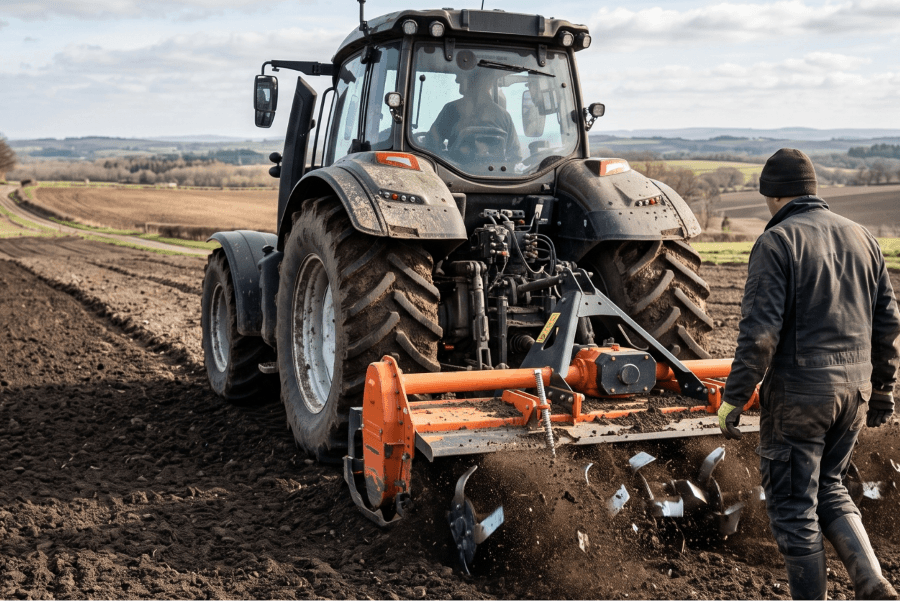
Tractors are often among the most important assets on a farm, but modern machinery can represent a substantial investment. Agricultural finance can potentially be used to fund:
Whether you’re replacing an ageing machine or increasing capacity, asset finance can allow you to spread the cost rather than committing a large amount of cash upfront.
Harvesting Equipment
Harvesting machinery can be particularly important because delays can have a direct impact on productivity and profitability. Financing a combine, harvester or other specialist equipment can allow a farm to invest in modern machinery while retaining working capital for other costs.
Commercial Vehicles
Agricultural businesses often need more than tractors. Finance can also be used for commercial vehicles such as:
This can be particularly useful for farms that also operate agricultural contracting, haulage or other diversified activities.
Livestock Equipment
Agricultural finance isn’t restricted to large machinery. Depending on the lender and the type of finance, funding may also be available for equipment used in livestock operations, including milking equipment, feeding systems, livestock handling equipment and other specialist installations.
Renewable Energy and Agri-Tech
Technology is becoming increasingly important across the agricultural sector. Farms are investing in areas such as:
The right finance structure can allow businesses to invest in technology that may reduce operating costs or improve productivity over time.
Asset finance is one of the most common ways for farming businesses to fund machinery and equipment. The basic principle is straightforward: instead of paying the full purchase price from your own funds, the cost is spread over an agreed finance term.
The British Business Bank explains that asset finance can help businesses acquire essential equipment without placing the same immediate pressure on cash flow as an outright purchase.
For agricultural businesses, this can be particularly valuable because machinery is often essential to generating income.
Hire Purchase for Agricultural Machinery
Hire Purchase allows a farm to spread the cost of an asset through regular repayments. Once the agreement has been completed, ownership of the asset passes to the business, subject to the terms of the agreement. This can be suitable for businesses looking to retain ownership of their machinery over the longer term.
Finance Lease
A Finance Lease provides another way of using equipment without purchasing it outright at the beginning of the agreement. The structure can be useful where preserving working capital is a priority, although ownership and end-of-term arrangements differ from Hire Purchase. The most suitable structure will depend on the business, the asset and the lender.
Machinery investment is a major part of the agricultural economy.
The latest Defra machinery investment statistics show that farms in England spent £2.3 billion on machinery in 2023/24, with around 74% of farms purchasing machinery during the year. The median spend on tractors was £62,800.
These figures demonstrate just how important machinery investment is to modern farming. For an individual farm, however, a major machinery purchase can put considerable pressure on cash reserves. Agricultural machinery finance can help spread that cost and allow businesses to maintain liquidity for:
This is where choosing the right finance structure becomes particularly important.
Not every agricultural funding requirement relates to a specific piece of machinery. A business loan can provide more flexible funding where the money is needed for a wider business purpose.
For example, a farm may require funding to:
Unlike asset finance, a business loan isn’t necessarily tied to a particular piece of equipment.
Farm businesses can accumulate several finance agreements over time, particularly where machinery and vehicles have been purchased at different points. Refinancing can potentially help restructure existing borrowing and improve cash flow. Depending on the circumstances, agricultural refinance may be used to:
It’s important to compare the overall cost of refinancing rather than simply focusing on reducing the monthly payment.
Cash flow is particularly important in agriculture because income and expenditure don’t always occur at the same time. A farm might incur substantial costs months before receiving income from a crop or livestock sale. Working capital finance can provide additional flexibility during these periods. Potential solutions include:
Business Loans
A term loan can provide a lump sum that is repaid over an agreed period.
Overdraft Facilities
An overdraft can provide flexible access to additional working capital when required, subject to the lender’s terms.
Invoice Finance
For agricultural businesses that invoice commercial customers, invoice finance can release cash tied up in unpaid invoices.
This can be particularly relevant to agricultural contractors and diversified rural businesses that provide services to other companies.
Farming businesses often have a very different cash flow cycle to other industries. Income may be concentrated around harvests, livestock sales or other specific points in the agricultural calendar, while costs such as seed, fertiliser, feed, fuel, wages and machinery repairs can arise months beforehand.
This seasonality can make the timing of finance particularly important.
When arranging agricultural finance, some lenders may be able to structure repayments around the seasonal cash flow of the business, rather than assuming income and expenditure are evenly spread throughout the year. Depending on the finance product and lender, this could include seasonal repayment profiles, deferred payments or arrangements that reflect when the farm expects to receive its main income.
For example, a farming business may prefer repayments to be lower during periods when expenditure is highest and income is limited, with larger payments scheduled around harvest or livestock sales.
It’s important to remember that seasonal repayment structures aren’t available from every lender or for every type of finance, and they may affect the overall cost of borrowing. An experienced agricultural finance broker can help identify lenders that understand the seasonal nature of your business and discuss the options available.
Many farming businesses have expanded beyond traditional agricultural activities. Diversification can include:
Finance can potentially support investment in equipment, vehicles or other business requirements associated with diversification. The key consideration is whether the proposed investment is commercially viable and whether the finance can be comfortably serviced from the business’s projected cash flow.
Agricultural finance applications are assessed individually, and different lenders will have different criteria. However, lenders are likely to consider several important areas.
Trading History
An established farming business with a track record of trading may have more financial information available for a lender to assess. For newer agricultural businesses, lenders may place greater emphasis on the experience of the directors or owners and the strength of the business proposition.
Cash Flow
Cash flow is particularly important for seasonal businesses. A lender will want to understand when the business receives income and when major costs arise.
Existing Borrowing
Existing finance commitments will normally be considered when assessing affordability. This doesn’t automatically prevent a business from obtaining additional finance, but the lender needs to understand the overall level of borrowing.
The Asset Being Purchased
The type, age, condition and value of agricultural machinery can all influence the finance options available. New and used machinery can both potentially be financed, although lender criteria vary.
Credit History
Lenders may look at both business and personal credit histories, depending on the structure of the application. A less-than-perfect credit history doesn’t necessarily mean an application will be unsuccessful. The overall strength of the business and circumstances surrounding any adverse credit can be important.
There isn’t one universal amount. The amount available will depend on factors including:
Agricultural finance can range from relatively small equipment purchases to significant machinery and vehicle investments. The important point is not simply how much you can borrow, but how much finance is appropriate for the business to repay comfortably.
Finance isn’t necessarily limited to new equipment. Many agricultural businesses purchase quality used machinery because it can offer a lower initial cost while still providing the capability required. The availability of finance for used equipment will depend on the asset, its age, condition and the lender’s criteria.
If you’re considering used machinery, it’s worth discussing the proposed purchase with a finance broker before committing to the transaction.
Government grants can sometimes contribute towards agricultural investment. For example, the Farming Investment Fund has supported investment in farming equipment and technology. Government statistics published in January 2026 reported that, by September 2025, the Farming Equipment and Technology Fund had received more than 30,000 full applications across four annual rounds.
However, grants and commercial finance are different forms of funding. A grant may contribute towards an eligible purchase, while finance can potentially fund the remaining cost, subject to lender criteria. It’s important to check the specific rules of any grant scheme before arranging finance.
Potentially, although the answer depends on the individual grant scheme and lender. If you’re planning a significant machinery investment, consider the complete funding requirement rather than looking at the purchase price alone. This may include:
Getting the funding structure right from the outset can make the overall investment easier to manage.
One of the biggest advantages of financing machinery rather than purchasing it outright is the ability to preserve cash within the business.
Consider a farm purchasing a £100,000 piece of equipment. Paying the full amount immediately could significantly reduce available working capital. Financing the purchase instead allows the business to spread the cost, potentially leaving more cash available for the day-to-day operation of the farm.
This doesn’t automatically make finance cheaper than buying outright. Interest and other costs need to be considered. The key question is whether retaining that working capital has sufficient value to the business to justify the cost of finance.
There isn’t one finance product that suits every farming business. The right option will depend on what you’re funding and how the business operates.
| Requirement | Potential Solution |
|---|---|
| Tractor or combine | Asset Finance |
| Agricultural machinery | Hire Purchase / Asset Finance |
| Commercial vehicle | Asset Finance |
| General expansion | Business Loan |
| Existing finance commitments | Refinance |
| Unpaid commercial invoices | Invoice Finance |
| Short-term cash flow | Overdraft / Working Capital Finance |
| Farm diversification | Business Loan / Asset Finance |
| Agri-tech investment | Asset Finance / Business Loan |
An independent finance broker can help compare the available options and identify lenders that understand the requirements of agricultural businesses.
Agricultural finance can be more specialist than standard business funding. A broker can help you understand the options available and approach lenders based on the specific requirements of your business. This can be particularly useful where you have:
What is agricultural finance?
Agricultural finance is funding designed to help farmers, agricultural contractors and rural businesses purchase equipment, machinery, vehicles or access working capital.
Can I finance a tractor?
Yes. Tractors can potentially be financed through asset finance or Hire Purchase, subject to lender criteria.
Can used agricultural machinery be financed?
Yes. Many lenders will consider used agricultural machinery, although the age, condition and value of the equipment can affect availability.
Can I finance a combine harvester?
Yes. Combine harvesters and other specialist agricultural machinery can potentially be financed through asset finance.
Can agricultural businesses get finance for vehicles?
Yes. Commercial vehicles such as HGVs, vans, pickups, tippers and specialist agricultural vehicles can potentially be financed.
Can I refinance existing agricultural finance?
Potentially. Agricultural businesses may be able to refinance existing equipment or finance agreements, depending on the lender and circumstances.
Can agricultural finance be used for farm diversification?
Yes. Depending on the funding structure, finance may be available for equipment, vehicles and other investment associated with commercially viable diversification projects.
Can I use a grant alongside agricultural finance?
Potentially. However, grant schemes have their own rules around eligible expenditure and other funding, so these should always be checked before proceeding.
We regularly help UK businesses secure funding for equipment, vehicles and machinery, including businesses operating in agriculture and related sectors.
Explore our Agricultural case study to see real examples of how businesses have used asset finance and other funding solutions to invest in equipment, improve capacity and support growth.
Whether you’re replacing a tractor, investing in harvesting equipment, adding commercial vehicles or looking for additional working capital, the right finance structure can help you invest without putting unnecessary pressure on your cash flow.
Contact Liquid Corporate Finance today for a free, no-obligation discussion about your agricultural finance requirements.






Longer term = lower payments
This enquiry will not affect your credit score